The Culinary Soul of Naxos: An Island of Earth and Sea
Naxos is an anomaly in the Cyclades. While its neighbors often rely on imports to feed the summer crowds, Naxos remains the agricultural heartbeat of the Aegean. It is the largest island in the archipelago, and its geography—ranging from high, verdant mountains to fertile valleys—allows it to be largely self-sufficient. For the food lover, this creates an unparalleled travel experience. You are not just eating in a restaurant; you are experiencing the direct output of the soil, the pasture, and the surrounding Mediterranean waters.
To understand Naxian cuisine, you must appreciate the concept of gaiostrofia, or the bounty of the earth. From the legendary Naxian potatoes to the sharp, savory cheeses and the abundance of wild herbs, every dish reflects a history of farmers, shepherds, and fishermen who have mastered the art of living well with what the land provides.
The Pillars of Naxian Gastronomy
If you were to break down the DNA of a Naxian meal, you would find three dominant elements: potatoes, cheese, and meat. These are not merely ingredients; they are cultural touchstones.
The Naxian Potato: A Protected Treasure
It sounds humble, but the Naxian potato is a protected geographical indication (PGI) product for a reason. The island's unique microclimate and mineral-rich soil give these tubers a buttery texture and a sweetness that sets them apart from anything found in a standard supermarket. Do not leave the island without trying them fried in local olive oil, where they develop a crispy exterior and a cloud-like interior that borders on addictive.
The World of Cheese
Naxian cheese production is a deeply ingrained tradition. The island is particularly famous for Graviera Naxou, a semi-hard, sweet, and nutty cheese made from a mix of cow's, sheep's, and goat's milk. Other staples include Arseniko—a pungent, salty, and hard sheep's milk cheese that is often aged in caves or local lard—and Myzithra, a fresh, creamy cheese perfect for drizzling with local thyme honey.
For travelers looking to bring a piece of this culinary culture home, it is worth investing in quality kitchen tools to recreate the local flavors.
High-Quality Cheese Grater
Recommended gear for your adventure

Professional Stainless Steel Box Cheese Grater - Premium Choice

Top Rated Professional Gear

Professional Professional Stainless Steel Box Cheese Grater

Compact Professional Stainless Steel Box Cheese Grater (Travel Size)
Meat and Wild Herbs
Because the mountainous interior of Naxos is so well-suited to grazing, the island boasts some of the finest lamb and goat in Greece. Unlike coastal islands that prioritize seafood, Naxos has a strong pastoral identity. You will find dishes like katsiki lemonato (goat braised in lemon and oregano) and souvla (spit-roasted meats) that lean heavily into the rustic, honest flavors of the highland traditions.
Must-Try Dishes in Naxian Tavernas
When you sit down at a traditional taverna, look past the generic Greek salads and focus on the local specialties that define the island’s terroir:
- Patatato: A hearty, slow-cooked stew of beef or goat combined with those famous potatoes in a rich tomato sauce. It is the ultimate comfort food, usually prepared in large clay pots.
- Kalogeros: A decadent baked dish featuring thin slices of veal topped with a thick layer of eggplant, tomato sauce, and plenty of local Graviera cheese, all melted until bubbly and golden.
- Saganaki Naxou: While saganaki (fried cheese) is common throughout Greece, the Naxian version uses locally sourced Graviera, which melts with a distinct, rich profile compared to the standard Kefalograviera.
- Kitron Liqueur: After your meal, you will likely be served a glass of Kitron, a local digestive made from the leaves and fruit of the citron tree. It is unique to Naxos and comes in three varieties: green (sweet), clear (balanced), and yellow (stronger and less sweet).
The Agricultural Heart: A Mountain Village Itinerary
To truly get to the core of Naxian food, you must leave the Chora (the main port town) and head into the mountains. Villages like Apiranthos, Filoti, and Halki are the custodians of the island's culinary secrets.
Morning: The Distillery and The Olive Grove
Start your day in Halki, the former capital. Visit the Vallindras Distillery, which has been producing Kitron since the 19th century. Seeing the copper stills and learning about the distillation process of the citron leaves offers a rare glimpse into the island's industrial food history. Afterward, grab a coffee in the village square and pair it with a slice of local almond cake.
Afternoon: The Meat Traditions of Apiranthos
Drive up to Apiranthos, a village built almost entirely of marble. The air is thinner and cooler here, and the food follows suit. Seek out a taverna that specializes in xynomizithra, a sour, fresh goat cheese that is a local delicacy. This is the place to try the heartier meat dishes—order the local goat cooked in a wood-fired oven. The process is slow and deliberate, resulting in meat that falls away from the bone with the slightest touch.
If you are planning on documenting your culinary travels, having a reliable way to store your photos and recipes is vital.
Portable External Hard Drive
Recommended gear for your adventure

Evening: Coastal Sunset Dining
End your day back near the coast, but avoid the main tourist drag. Head to the northern beaches or the quiet harbors like Apollonas. Here, the menu shifts to the sea. Ask for gouna—sun-dried, salt-cured mackerel or rockfish, grilled over charcoal until the fats render and the skin turns crispy. It is a traditional fisherman’s snack that pairs perfectly with a crisp, dry Assyrtiko white wine.
Practical Tips for the Food-Focused Traveler
Planning your trip around the harvest or the peak season can change your experience entirely. Here is what you need to know:
Best Time to Visit
If you want to experience the true agricultural cycle, visit in **May or June**. The landscape is still green, the temperatures are comfortable, and you are likely to catch the harvest of early summer vegetables. If you prefer to focus on the cheese production and the harvest festivals, **September** is an ideal time; the summer crowds have dissipated, and the local farmers have more time to talk about their craft.
Navigating the Menus
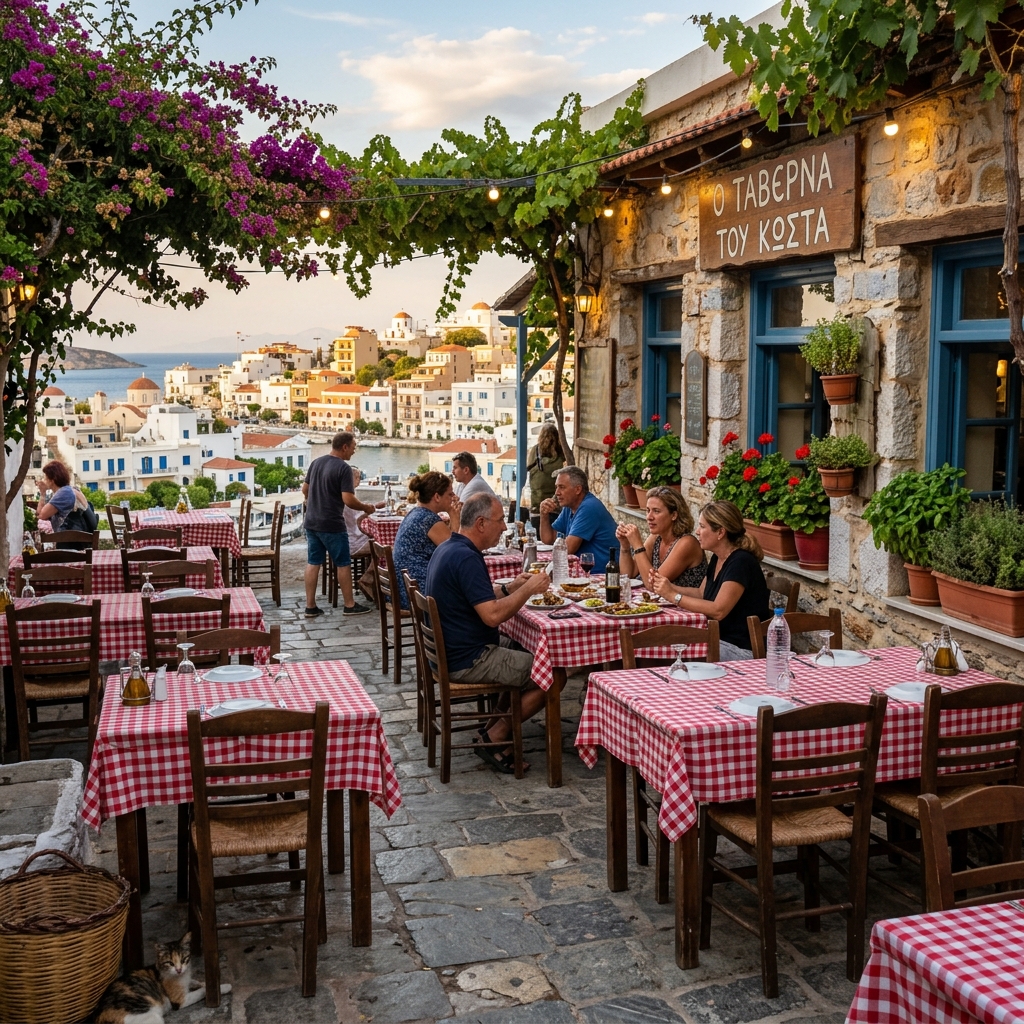
A good rule of thumb in Naxos: if the menu has thirty pages, it is not the place to go. Look for smaller, chalkboard-style menus. These indicate that the kitchen is cooking based on what was available at the market or the farm that morning. If a taverna does not have the "daily special" listed on the board, ask the server: "Ti exete shmera?" (What do you have today?).
Understanding Local Pricing
Naxos is generally more affordable than its neighbors like Santorini or Mykonos. You can expect to pay significantly less for high-quality, farm-to-table food. However, do not mistake lower prices for lower quality. Because the food is locally sourced, the overhead costs for restaurants are lower than on islands where everything must be shipped in by boat.
The Culture of Hospitality: 'Philoxenia'
In Naxos, food is the primary language of philoxenia, or the love of strangers. It is common for a tavern owner to bring you a complimentary dessert or a small glass of raki at the end of a meal. This is not a transaction; it is an invitation. If you show a genuine interest in the provenance of the ingredients, you will find that Naxians are eager to share stories about their olive trees, the grazing habits of their sheep, and the history of their families.
Respect for this culture is paramount. Dress comfortably, eat slowly, and allow yourself the time to let a meal stretch for three hours. The Naxian lifestyle is not about rushing to the next sightseeing spot; it is about lingering over the finish of an aged cheese, the crispness of a locally grown vegetable, and the golden light of the Aegean sun as it dips behind the mountains.
Final Culinary Recommendations
To summarize, a trip to Naxos is a journey into the pantry of the Aegean. You are eating the results of a symbiotic relationship between humans and the land. Whether you are cracking open an oyster in a coastal bay or eating a bowl of goat stew in a marble-paved mountain square, you are participating in a tradition that has survived for millennia.
Keep a physical journal or a set of notes regarding which tavernas you enjoyed most. While digital resources are helpful, the best recommendations in Naxos are often given to you by the person sitting at the next table or the local shopkeeper who sells you your honey. Embrace the spontaneity, follow your nose, and always, always order the potatoes.
Disclaimer: This article contains affiliate links. If you book or purchase through these links, we may earn a small commission at no extra cost to you. This helps support our travel guides.